
How to Tell When Your Septic Tank Is Full
If you are trying to figure out how to tell septic tank is full, the lid is the wrong place to look. A working tank always sits full to the outlet pipe by design. The real signs your septic tank is full show up somewhere else: at your drains, in your yard, and in the air around the tank.
Below: seven signs to watch for, the difference between routine and emergency, and what to skip while you sort it out.
Why a “full” tank usually does not look the way you think
If you are wondering what a full septic tank looks like, the honest answer is that it looks like a working septic tank. Both look full when you peer inside, because by design the liquid stays at outlet pipe level all the time. The U.S. EPA explains why: “Compartments and a T-shaped outlet prevent the sludge and scum from leaving the tank and traveling into the drainfield area.”

That T-shaped outlet baffle holds the water at the height of the outlet pipe whenever the system is working. The water you would see if you lifted the lid is exactly where it is supposed to be.
The right question is not how high the water is. It is how thick the sludge and scum layers are, and that takes a sludge judge to measure, not a flashlight. Sludge can sit just under the water level, so a tank can look normal from above while still being due for pumping. If the pipe leading back toward the house is submerged, the tank is overfull and the backup risk is higher. Skip the lid lift either way. Sewer gas inside the tank is toxic, and older lids have collapsed under foot traffic.
Seven signs your septic tank is full
1. Your drains and toilets run slow throughout the house
One slow drain points at a clog in that fixture’s line. When every drain in the house slows down at once, the problem is upstream at the tank or the main line. If nobody can remember the last time the tank was pumped, whole-house slow drains are a stronger sign that the tank is overdue.
Do not reach for a chemical drain cleaner. We wrote about why Drano is rough on septic systems, and the chemicals do not solve a tank-level problem.
2. Toilets and drains gurgle when you flush or run water
Gurgling is air that cannot move through the pipe normally. When the tank is too full to vent, water coming down a drain pushes air back up through another drain or toilet. A closer look at toilet gurgling covers the why.
3. There is a sewage smell outside near the tank or drainfield
A working tank usually does not smell at the surface. The lid seals it, the outlet baffle keeps gas down, and the soil filters what does come up. When someone calls about septic odor, one of the first questions is when the system was last cleaned. If nobody remembers the last pump-out, odor can be a sign the tank is overdue. Odor can also come from standing water outside the tanks or from an aerator that is not working correctly. Smell alone is usually a “call this week” situation. Smell plus an alarm sound, standing water, or backup is a “call now” situation.
4. The ground over the tank or drainfield is soggy or pooling water
Effluent has nowhere to go but up. If you see standing water above the tank or over the drainfield even when the rest of the yard is dry, or if your boots sink into the grass after a rain in spots that used to be firm, the soil is saturated for a reason. Standing water around the tanks can also create a strong odor and may point to leaking tanks or overflow. Pair this with sign #5 below for confirmation.

5. The grass over your drainfield is unusually green or lush
This is the counter-intuitive one. The EPA lists “Bright green, spongy lush grass over the septic tank or drainfield, even during dry weather” as a sign of system trouble. Effluent that should be soaking down through several feet of soil is reaching the topsoil instead and acting like fertilizer. Around a septic system, unusually green grass can point to a broken pipe, a clogged pipe, failing leach lines, or leaking or overflow around the tanks. If the grass over the field is noticeably greener and taller than the rest of the yard, especially in dry weeks, it is a flag (the bright strip in the hero image at the top of this post is the visual you are looking for).
6. Sewage is backing up into the lowest drains in the house
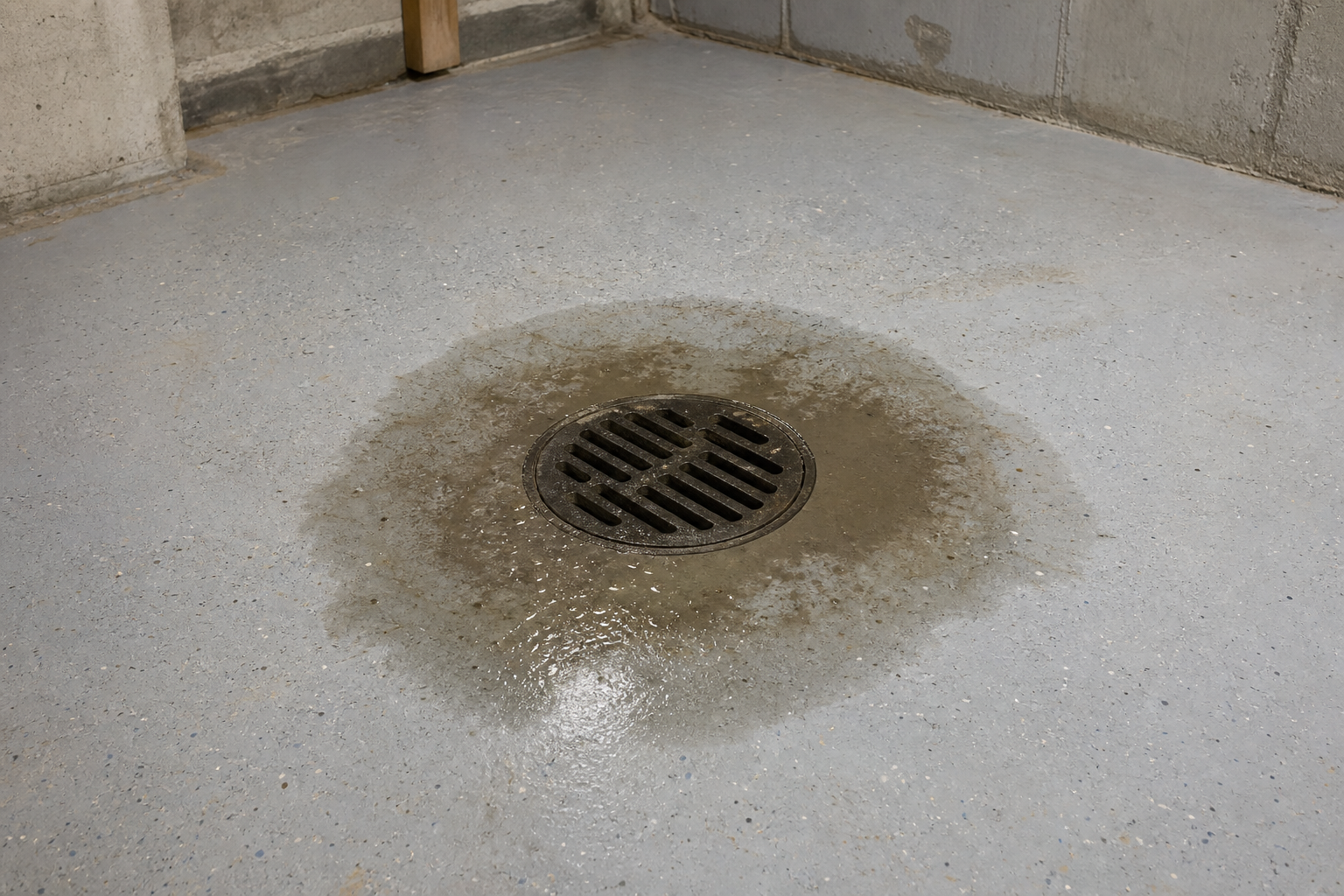
Basement floor drains, basement toilets, the lowest tub or shower. Sewage coming up through any of these means the tank is out of room and water is backing into the house. Stop using water and call. Treat this as an emergency. Our emergency septic service line is for exactly this.
7. Your aerobic system alarm is going off
If you have an NPDES discharge system or a Spray system, you have an alarm panel mounted somewhere visible. Ohio code is direct on what those panels have to do: “Controls shall have both audible and visual alarms.” If your alarm is going off, the system is using the exact mechanism the state requires for telling you something is wrong. On aerobic systems, common causes include hair or lint wrapped around the aerator shaft, an aerator that has failed or stopped working, a pump or float issue, or a breaker issue. Take it seriously and call.

An alarm sound paired with a sewage smell or a backup is an emergency. An alarm with no other signs still needs attention soon: cut back on water use and call or text us during business hours to get it checked. We have a closer read on what an aerobic alarm means if you want the full picture.
When the signs mean an emergency, and when they mean routine
Not every full-tank sign means stop everything. Use this rough split:
Call now, do not wait. Sewage in the house. Raw sewage on the ground in the yard. An alarm sound paired with a smell or a backup. These need our emergency septic service.
Call soon, schedule within the next week or two. Slow drains by themselves, especially if you cannot remember the last pump-out. A patch of unusually lush grass over the field. An occasional gurgle. A mild outdoor smell only after a heavy rain. These are real signs, but they are not active emergencies. A routine pump-out usually clears them or shows what else needs attention.
When the line is unclear, call. We would rather field a “probably nothing” call than have you wait through a real backup.
What not to do when you suspect your tank is full
Do not pour additives or “tank cleaner” products in. The EPA’s position on additives is direct: “use of these additives is not recommended for domestic wastewater treatment because there is already a significant presence of bacteria, enzymes, yeasts, fungi, and other microorganisms in onsite wastewater treatment systems.” If the EPA is not pushing them, you do not need them. We covered this in more depth in our piece on whether septic tank additives are necessary.
Do not run more water to “flush it through.” A backed-up tank does not get cleared by sending more water at it.
Do not open the tank lid yourself to look. Sewer gas is toxic. Older lids collapse.
Do not ignore an alarm. Ohio code put that alarm there for a reason.
How often does a tank actually fill up?
According to the EPA, “Household septic tanks are typically pumped every three to five years.” The exact number depends on family size, garbage disposal use, tank size, and last pump-out date. Our pumping frequency guide walks through how to dial in your schedule.
What happens when we come pump it
We bring a vacuum truck, locate the lid, pump the tank, inspect the baffles and outlet filter, and tell you what we found. The pump-out itself is a one-time service. Routine septic tank cleaning and ongoing maintenance are how you keep the system healthy in between.
Frequently asked questions
Need help with a full septic tank in northeast Ohio?
We pump and clean septic tanks across nine counties: Medina, Summit, Wayne, Lorain, Cuyahoga, Stark, Portage, Ashland, and Erie. If any of these signs sound familiar, get in touch or use the call button below. For emergencies, use the emergency line and we will work you in.