
Septic Tank Pumping in Medina & Northeast Ohio
Need septic tank pumping in Medina or anywhere in Northeast Ohio? Call or text Double Flush Septic to schedule a pump-out, whether the tank is due, overdue, the home was recently purchased, or warning signs say the tank may be full. We serve homeowners across our nine-county Northeast Ohio service area.
If you are scheduling for a restaurant, rental property, shop, or managed site, we handle commercial septic services too, including pumping and cleaning.
Serving Medina, Lorain, Summit, Wayne, Cuyahoga, Stark, Portage, Erie, and Ashland counties.
Call or Text to Get on the Pumping Schedule
Call or text 330-391-5551 and we will ask a few quick questions so we can understand the job and help you get the pump-out scheduled.
It helps to know where the property is, whether the tank lids are exposed, and what made you decide it is time to call. If you do not know where the lids are or when the tank was last pumped, that is common. We can still talk through the next step.
Before the visit, we will want a reasonable path to the tank area for hose access. If there are vehicles, gates, pets, or items near the lids, clearing those when you can helps the service go smoother.
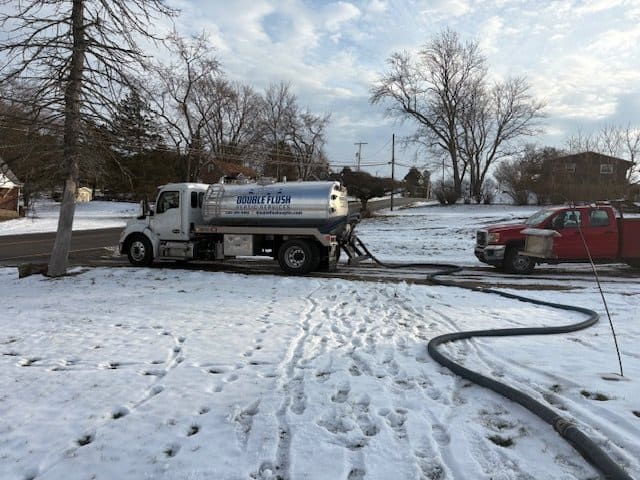

How a Septic Pump-Out Visit Usually Works
A good pumping visit should feel straightforward. We are there to access the tank, pump the tank down, remove the built-up waste, and give you a practical read on anything obvious we can see from the open tank area.
We confirm access
The first practical question is how the tank can be reached. Exposed lids, buried lids, fences, slopes, landscaping, and hose distance all affect how the service day goes.
We open the tank
Once the lid area is accessible, the tank can be opened for pumping. This is also when obvious access issues, lid concerns, or visible tank-area conditions are easiest to understand.
We pump out the tank
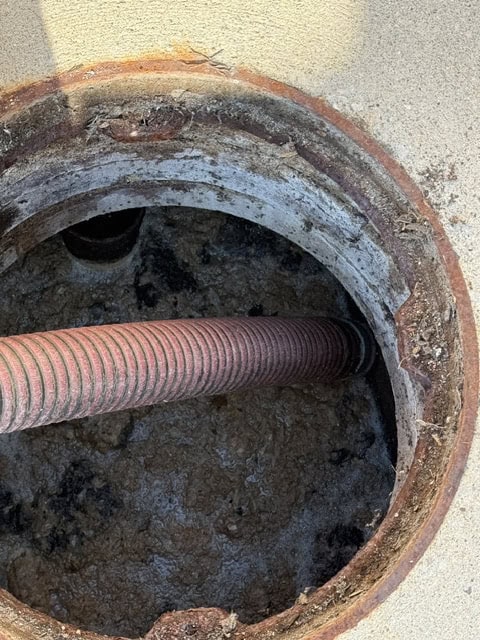
We pump the tank down, remove the built-up waste, and backflush when needed to thoroughly remove sludge.
We explain what was visible
Pumping does not solve every septic issue, but it can reveal useful clues. If something visible points beyond a full tank, we explain the next likely service path.
This is why a septic pump-out is not just a truck visit. Access, timing, symptoms, how thick the sludge is, and what is visible at the tank all shape the service call. A faster visit does not mean a rushed job. We clean a lot of septic systems, have a system, know the job, carry clean water, and have what we need to finish efficiently and thoroughly.
Signs Your Septic Tank May Need Pumping
A septic tank does not always give one clear warning before it needs pumping. Sometimes the first signs are small. Other times, the system is already backing up by the time someone calls.
How Often Should a Septic Tank Be Pumped?
There is no single schedule that fits every home. Pumping frequency depends on tank size, household size, water use, system type, and how long it has been since the last pump-out.
In our Northeast Ohio service area, a 1,000 gallon tank may need pumping every 3 to 5 years for 1 to 2 people, every 2 to 4 years for 2 to 4 people, and every 1 to 3 years for 5 to 6 people. Larger tanks can often go longer, but usage changes the schedule.
If you do not know when the tank was last pumped, do not guess your way through another season. Call or text with the property details and we can help you decide whether it is time to schedule service.
Between pump-outs, routine septic tank cleaning keeps the filter, baffles, and system check on schedule. For more timing detail, read our guide on how often to pump a septic tank for a family of four.
What Affects Septic Tank Pumping Cost?
Septic pumping cost depends on the actual job. A straightforward pump-out with exposed lids is different from a buried, hard-to-locate, hard-to-reach tank with active backup symptoms.
The best cost conversation is tied to the real property, not a national average that may not match your yard. Tank size, lid access, hose distance, site conditions, and whether the system is already showing symptoms all matter.
A recently serviced tank with exposed lids is usually a different conversation than a new-to-you property with buried lids and no service history. If drains are already slowing down or sewage odors are showing up, tell us that too, because a pump-out may be only part of the visit.
- tank size
- tank access
- exposed or buried lids
- lid depth
- truck and hose access
- site conditions
- routine or overdue tank
- active symptoms
For useful cost guidance, call or text 330-391-5551 with your city, lid access, and what you are seeing. If the setup is simple, we can usually keep the conversation simple too.
Septic Pumping Across Northeast Ohio
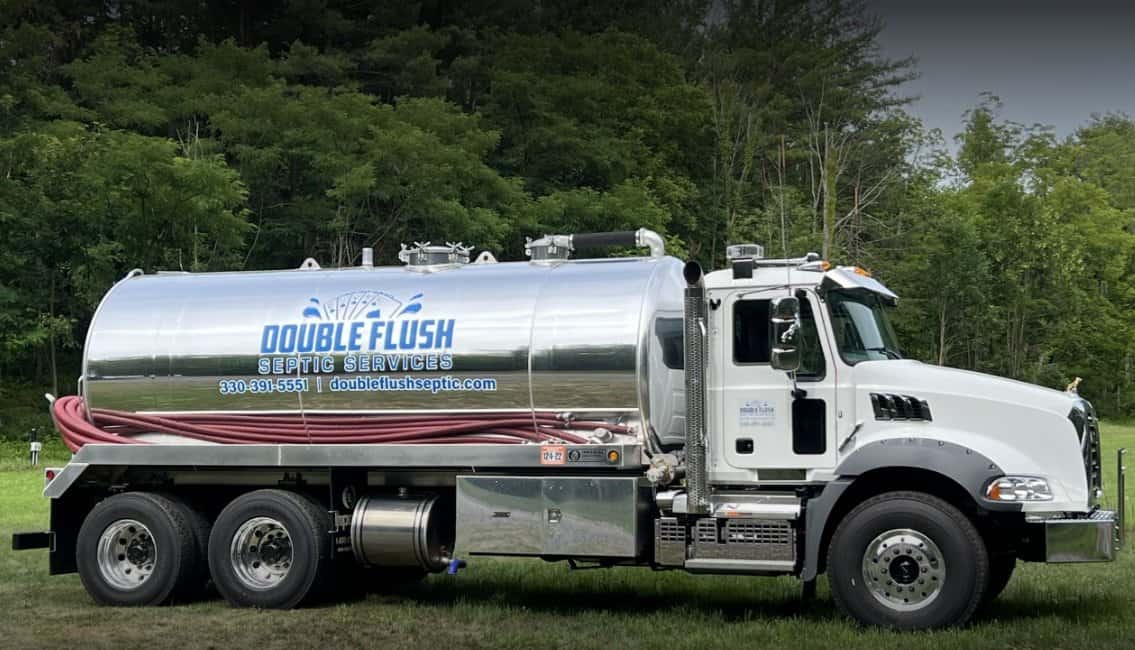
Double Flush Septic is based in Medina and provides septic tank pumping throughout our Northeast Ohio service area. If you are searching for septic pumping near me and are not sure whether your property is in range, call or text and we can confirm coverage.
Routine Pumping, Repairs, or Emergency Help?
Our heaviest local work is in Medina, Lorain, Summit, Wayne, and Cuyahoga counties, and we also handle pumping across the full nine-county service area. County pages can help with local service context, but the fastest path is still simple: call or text with the address and what is happening.
For homeowners, the goal is not to diagnose the whole system before calling. The goal is to get a local septic company looking at the tank before a manageable pumping need turns into a backup call.
Schedule routine pumping when the tank is due, overdue, recently purchased with unknown records, or showing mild warning signs that may be tied to a full tank.
Frequently Asked Questions
Schedule Septic Tank Pumping
If your septic tank is due, overdue, or showing signs that it may be full, call or text 330-391-5551 to schedule septic tank pumping with Double Flush Septic.
Tell us where the property is, whether the lids are exposed, when the tank was last pumped if you know, and what symptoms you are seeing. We provide local septic pump-outs across Northeast Ohio and can help you get the job scheduled with clearer expectations.