
How Long Does a Mound System Last? Lifespan & Failure Signs
Mound Septic System Lifespan: The “Hill” in Your Yard Is Aging
A question every homeowner with a mound septic often asks is, how long does a mound septic system last? If your mound septic system was installed over 15 years ago, it is time to start planning for the future. Unlike a traditional buried leach field, a mound system is a visible, engineered hill that works hard to process wastewater.
On average, a properly maintained mound septic system is often in the 20-year planning window, but the lifespan may vary significantly. Some well-maintained systems can last longer, and neglected systems can fail earlier. The sand-filtering nature of mounds means they have a finite useful life. Once the sand is saturated or sealed by biomat, the mound may eventually fail and be unable to take on water.
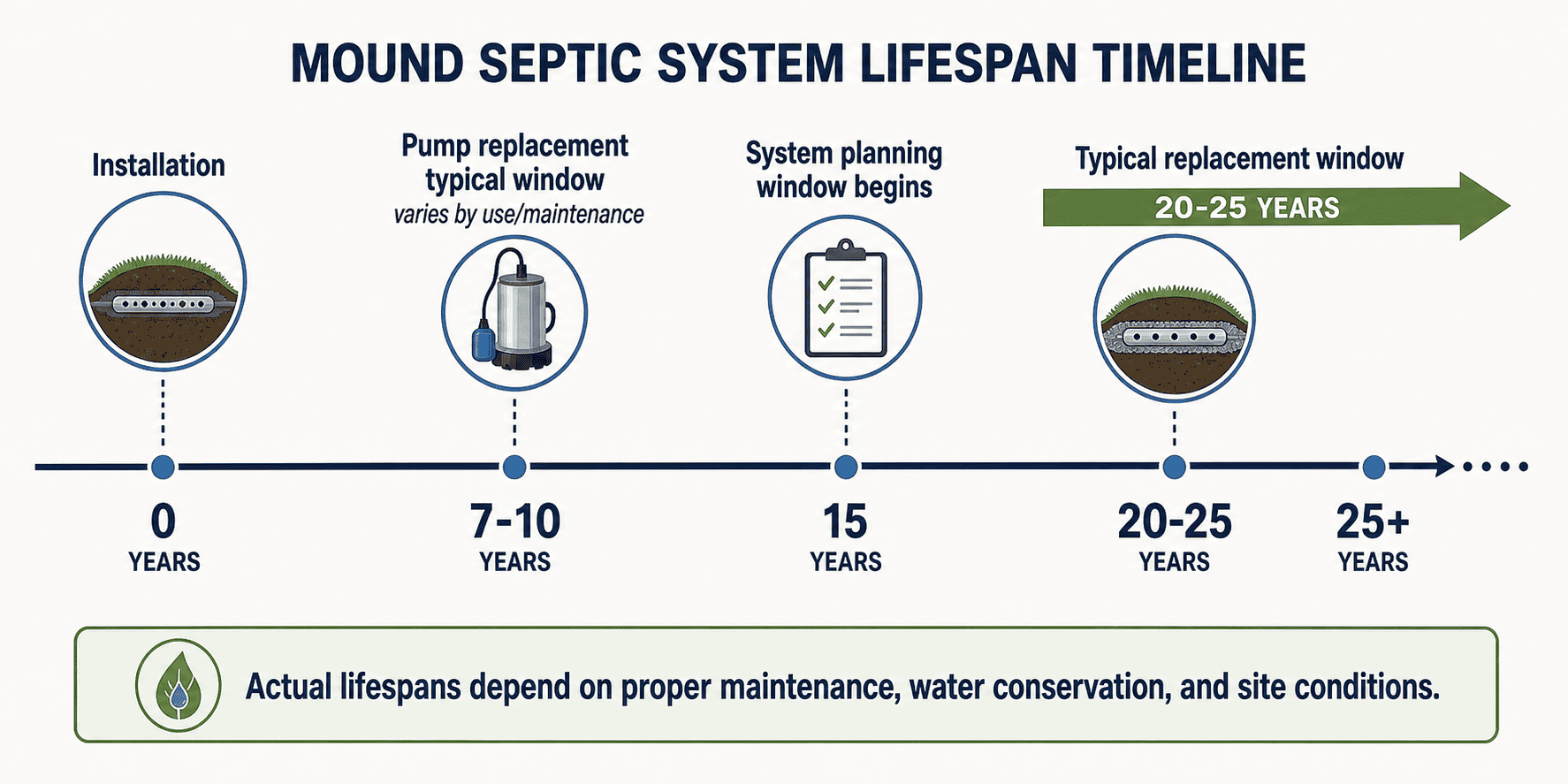
Sand Mound Septic System Life Expectancy vs. Conventional Systems
When considering sand mound septic system life expectancy, it is important to understand what the mound is made of. Unlike natural soil fields, mounds rely on specific sand layers. Over time, biomat, or bacterial slime, naturally forms and slows the drainage. Ohio State’s mound-system overview explains that a mound is constructed with selected sand, distribution piping, protective cover, and topsoil over natural soil.
Mounds are mechanical and rely on a discharge pump to move the effluent from the septic crocks to the mound to be properly processed. Discharge pumps have a shorter expected life than the mound itself and are a common septic repair due to pump failure. Homeowners often mistake a pump or float failure for a total system failure.
If the discharge pump is not functioning or your float has been stuck, you may experience an alarm event due to high water levels. This can also occur when your mound has failed, but it is important to address the pump or float first because it may be a serviceable repair.
All septic systems with discharge pumps can expect pump and electrical components to be periodically replaced throughout the lifespan of the system. A discharge pump should not be running continuously. If it is, the float may be stuck or the system may need service. A discharge pump that continues to run will burn out or fail sooner.
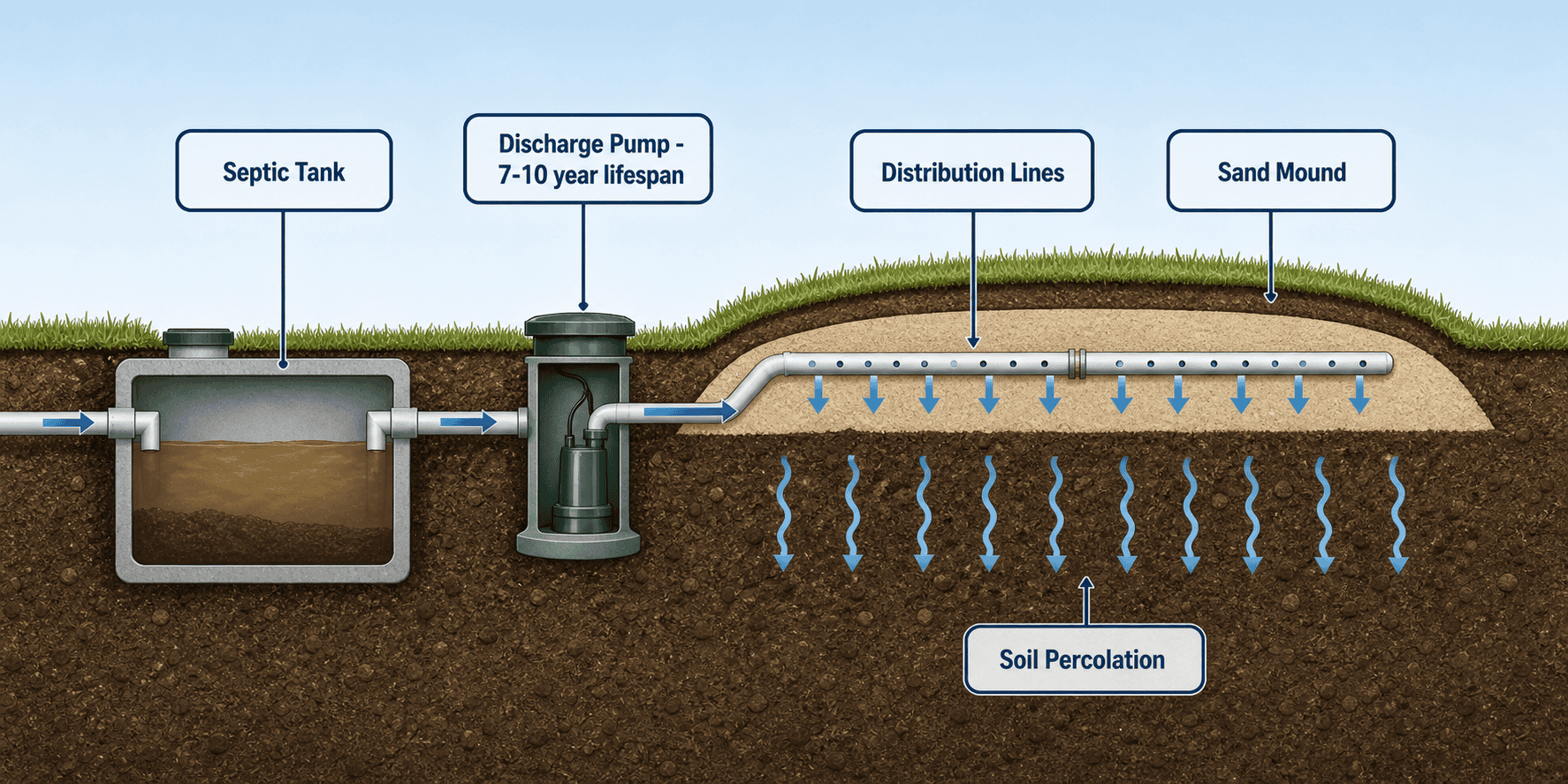
Mound Septic System Failure Signs Near End of Life
Due to the life expectancy of a mound septic system, you may experience one or more signs when it is nearing the point of failure.
Symptom 1: Side-slope seepage. This is when the water begins “toeing out” at the base of the mound. It can be a sign that the internal sand filter is full and no longer absorbing or processing the wastewater. This is one of the most common symptoms many homeowners face and is often due to the mound’s age or due to not having the septic system regularly pumped and maintained.
Symptom 2: Spongy grass. If the grass on the mound stays wet while the rest of the yard is dry, the system is failing to breathe.
Symptom 3: The constant alarm. If the pump is running but the water is not discharging out of the septic crock, this may be due to the mound being saturated. When the mound is saturated, it is unable to take on any more water and the water has nowhere to go. This is when you are at the highest risk for a backup.
If you are seeing active leaking, odor, wet spots, or an alarm right now, see our related article on septic mound system problems and call for a diagnostic visit.
When to Replace a Sand Mound Septic System in Ohio
When considering when to replace a sand mound septic system, it is important to remember that Medina, Summit, Wayne, and surrounding counties in Ohio do not treat a failing mound like a simple household repair. If a mound is no longer able to properly process wastewater, the local health department may require a full system replacement under Ohio household sewage treatment system rules.
Double Flush Septic Services is certified in Hydro-Action and Norweco systems and installs NPDES and spray irrigation systems. We work with the local health department and the homeowner to help ensure a smooth installation process when replacement is required.
How to Extend the Life of a Mound Septic System
Keeping your septic system healthy and functioning properly starts by ensuring routine septic cleanings and regular maintenance. This helps prevent sludge from entering the mound. You also want to ensure that no one ever drives a mower or vehicle on the hill, which can cause compaction of the mound. Ohio State notes that homeowners should avoid compacting the soil downslope of the mound and avoid clogging pipes with roots.
To help prolong the lifespan of your septic mound, it is important to conserve water and avoid multiple loads of laundry per day. Doing several loads of laundry in one day can drown the mound and push sludge into it. Limiting laundry to smaller batches across the week is ideal.
Conclusion: Planning for the Future
If your mound is 20+ years old and leaking, it is likely time to start planning for a replacement. Call or text Double Flush Septic Services for a service visit, and we will give you an honest assessment of your mound’s health. We strive to provide the information necessary to help you plan for the future and not be caught off guard by a septic emergency.
Frequently Asked Questions
Sources
- Ohio State Ohioline: Septic Tank: Mound System
- Ohio State Ohioline: Why Do Septic Systems Malfunction?
- EPA: Resolving Septic System Malfunctions
- Ohio Administrative Code Chapter 3701-29
Planning around an aging mound septic system?
Call or text Double Flush Septic Services for an honest service visit. We can help you understand whether you are dealing with a repairable component or a mound that needs replacement planning.