
Septic Mound System Problems: Signs of Failure & What to Do Next
Mound Septic System Problems: The “Hill” in Your Yard Is Acting Up
The “hill” in your yard may be a focal point on the property, or perhaps it is tucked away and blends into the rolling hills of Ohio. Regardless, this hill is a vital part of your septic system. Unlike a traditional leach field, which is buried underground, a mound system is often hard to miss. Ohio State’s mound-system overview explains that mound systems use selected sand, a dosing tank, and pressure distribution to treat effluent where soil conditions are limited.
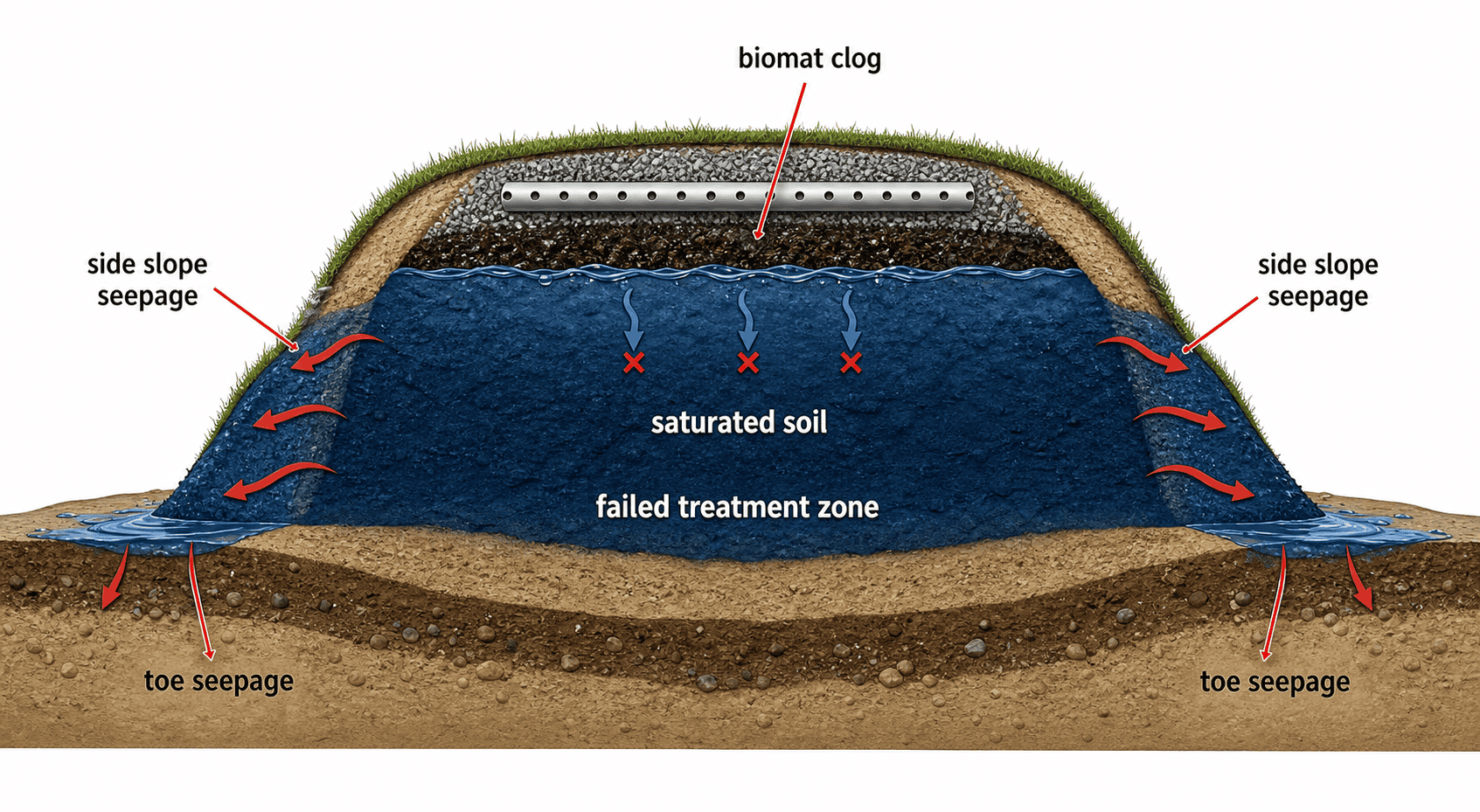
When it starts to smell or leak, it is a visible problem that requires immediate attention and often is due to mound septic system problems. You may notice the septic mound leaking from the side, a wet spot on the septic mound, or even the mound system pump alarm going off.
A mound system problem is usually caused by one of two things: a mechanical failure, like a pump or float, or a structural failure, such as soil saturation. Ohio State’s malfunction guidance makes a similar distinction between systems that are malfunctioning and systems that are failing.
While a pump located in the pump crock can be replaced, a saturated mound is a different issue. A saturated or failing mound may require a full system replacement through the local health department.
Top 3 Septic Mound Failure Signs
Septic mound system problems will often display one of these three signs:
1. Surfacing sewage, or seepage. Water leaking out the side of the mound or “toeing out” at the base. 2. The alarm or light. When a septic system cannot discharge, the high-water alarm may turn on. This signals there may be an issue with the float located on the discharge pump, the discharge pump itself may have failed, or the mound may not be taking on water. Please note, the discharge pump is located in one of the septic crocks, not in the basement. It is often confused with a sump pump. 3. Spongy or too-green grass. If the area surrounding the mound or the mound itself has lush green grass, or is greener than the rest of the yard, then the mound is essentially over-fertilizing because it cannot process the effluent. This is often due to the mound being oversaturated or a pipe in the mound being broken.

Pump Failure vs. Mound Failure: Simple Repair or Total Failure?
If your high-water alarm is on and you are looking to determine the culprit, there are a few things to look for. You will first want to address the mechanical components. A tripped septic-system breaker, faulty float switch, or failed discharge pump can all create an alarm condition. These are serviceable components.
Double Flush Septic Services carries float switches and discharge pumps on both pumper trucks and service vehicles. These are common professional septic repairs that can typically be addressed during a service visit.
If there are no issues with the mechanical components, the next concern is a possible structural issue. Similar to the leach field, if you have neglected routine septic cleaning, a biomat clog may be present in your mound. By skipping pumping, this may lead to a slime layer that seals the mound.
Another factor to consider is soil compaction. Often a lawn is maintained by someone who does not live there and who may be unfamiliar with septic mounds. It is important to note that a lawn mower or vehicle should never be driven on the mound.
Lastly, you may have done everything correctly but still are experiencing septic mound system problems. This may be due to the fact that mounds have a finite lifespan. If your mound is older and leaking, it may be nearing the end of its life. If your main question is age and planning, see our related article on how long mound systems last.
Septic Mound Replacement in Ohio: The Compliance Edge
In Medina, Summit, and surrounding counties, once a mound is clogged, saturated, or creating a public health nuisance, it is not something to patch casually. The local health department determines what repair or replacement is allowed under Ohio household sewage treatment system rules. If the mound is failing, the local health department may require a replacement septic system.
Double Flush Septic Services installs NPDES and spray irrigation systems. We do not present a failing mound as something that can be fixed with a bottle of chemicals or a quick patch.
What to Do About a Wet Spot, Odor, or Mound System Pump Alarm
If you have discovered a wet spot or a strong, persistent odor around or near your septic mound, you will want to consider conserving your water usage. Reducing water usage such as laundry and long showers may help prevent a system backup in your home. When the mound is unable to take on water, the septic crocks may become full and septage may back up into your home.
If you know where the septic-system breaker is and can safely confirm it has not tripped, you can check it once. Do not keep resetting a breaker or alarm that continues to trip, and do not handle pump or float components yourself. A float on the discharge pump may get stuck at times, the discharge pump may need replacement, or the mound may not be taking on water.
Always avoid pouring mound cleaners down the drain. They will not fix a saturated septic mound.
When to Call for Mound Septic System Problems
Do not wait for a backup. If your mound is leaking or if you have a visual or sound alarm screaming for attention, please do not ignore it. Call or text Double Flush Septic Services to schedule a service visit.
During the service visit, we will tell you if it is a pump repair, which can typically be addressed at the service visit, or if it is time to discuss a full septic replacement.
Frequently Asked Questions
Sources
- Ohio State Ohioline: Septic Tank: Mound System
- Ohio State Ohioline: Why Do Septic Systems Malfunction?
- EPA: Resolving Septic System Malfunctions
- Ohio Administrative Code Chapter 3701-29
Seeing mound septic system problems now?
Call or text Double Flush Septic Services for a service visit. We can tell you whether the issue looks like a pump repair, float problem, alarm condition, or possible mound failure.