
How to Unclog a Leach Field? Why “Cleaning” Your Drain Field Is Not a Real Fix
Clogged Leach Field Symptoms: The “Soggy Yard” Panic
Spring has sprung and it is a beautiful day to get some yard work done. You are on your mower when you discover a smelly, mushy patch of grass. Your immediate response is panic.
You know the soggy area pertains to your leach field, and there must be a way to unclog the leach drain. Your first instinct is to Google common phrases such as “how to fix a saturated leach field,” “septic field not draining,” or “clogged septic drain field.” You are looking for a quick fix, and you are hoping Google can provide the answer to “unclog” it.
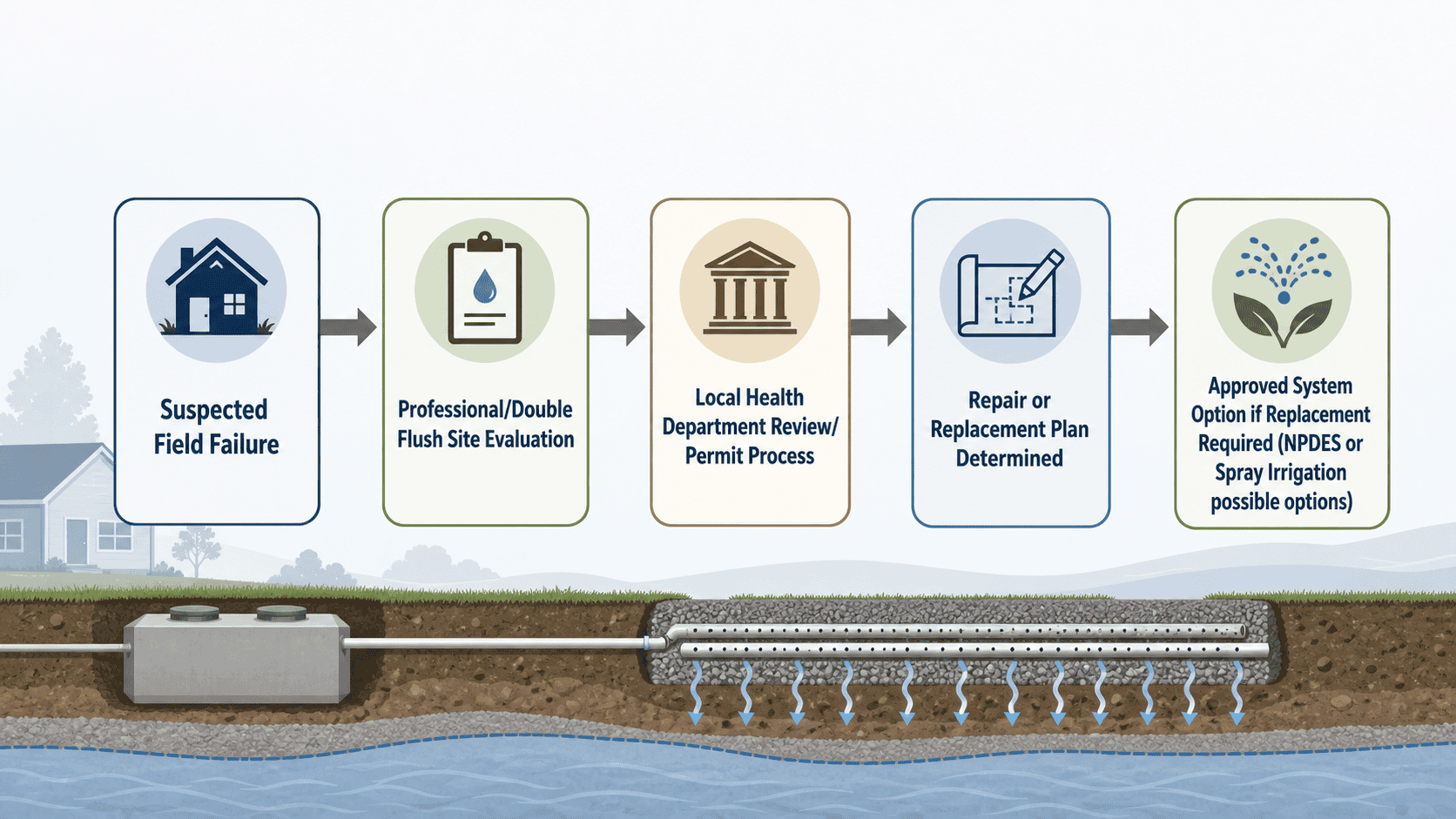
Unfortunately, when it comes to your leach field or leach lines, it is not like a kitchen sink. What is important to understand is that a clogged leach field can never truly be “unclogged” in the simple drain-cleaner sense. The surrounding soil may be saturated, full of roots, or blocked by biomat. Once the field is failing, the real path usually runs through diagnosis, the local health department, and a repair or replacement plan, not a quick homeowner patch.
Hydro-jetting, if possible, may be a temporary fix to help buy some time for a failing system. It does not repair saturated soil.
Clogged Pipe vs. Failed Leach Field: Why Unclogging Is Not Always Possible
When a pipe truly has a clog, it is a physical blockage often caused by a buildup of grease, wipes, or even a few roots. This clog often occurs between the home and the septic system in the main line. This type of clog can typically be addressed by snaking the line.
The type of clog that occurs in a leach line or field is often due to routine septic maintenance being neglected. Regular septic tank pumping and routine septic tank cleaning are important for maintaining a healthy, functioning septic system. The EPA explains that when solids leave the tank and move into the drainfield, they can clog the system and contribute to failure.
When a septic cleaning is not done on a regular basis, sludge builds up and eventually gets pushed into your leach lines and then makes its way to your leach field. Once the leach field is saturated with sludge, this is no longer just a pipe issue. It is a soil absorption issue.
By skipping routine septic cleanings, the solids can build up in the leach lines, forming a waterproof “slime” layer, also known as biomat or sludge, that seals off the pipe and eventually the soil in the leach field. In this situation, snaking the leach lines is not an option and would not be beneficial for unclogging a leach field.
Why Leach Field Cleaners and Hydro-Jetting Usually Do Not Fix Saturated Soil
Although it is tempting to find a quick fix such as putting a chemical in your leach field, this has not been found to be successful. Additives will not fix structural soil failure. Chemicals cannot “eat” their way through saturated Ohio clay soil and will not restore a failed leach field.
When exploring what options are available on how to clear leach field lines when the septic field is not draining, hydro-jetting is often mentioned. While hydro-jetting is an option to help clear pipe or lines, it does not fix the soil around the pipe. If the soil is full, the water has nowhere to go.
Hydro-jetting may allow you to buy some time, but ultimately your system is telling you that it is no longer functioning properly.
Failed Leach Field Replacement in Ohio: The Health Department Reality
As difficult as it is to hear that you may have a failing system, it is important to understand how septic systems work and what needs to happen next.
In Medina, Summit, Wayne, and surrounding counties in Ohio, a failed leach field is not handled like a simple household drain clog. The local health department determines what repair or replacement is allowed under Ohio household sewage treatment system rules. Once a leach field fails, the health department may require the system to be replaced or upgraded.
It is important to know that leach fields themselves cannot be patched as a quick homeowner fix. A full system replacement may be required. Double Flush Septic Services is Norweco and Hydro-Action certified, and we install NPDES and spray irrigation systems. We work with the homeowner step by step to help ensure a successful septic installation when that is the path the health department requires.
Signs Your Leach Field Is Failing
You may feel that the smelly, mushy patch of grass cannot possibly mean that your system has failed. Please know that we offer services to come out and inspect the area in question. Our knowledgeable technicians can explain their findings regarding whether or not your leach field has truly failed.
There are some things you can note on your own that will help diagnose the leach area condition. The technician will most likely ask these questions as well:
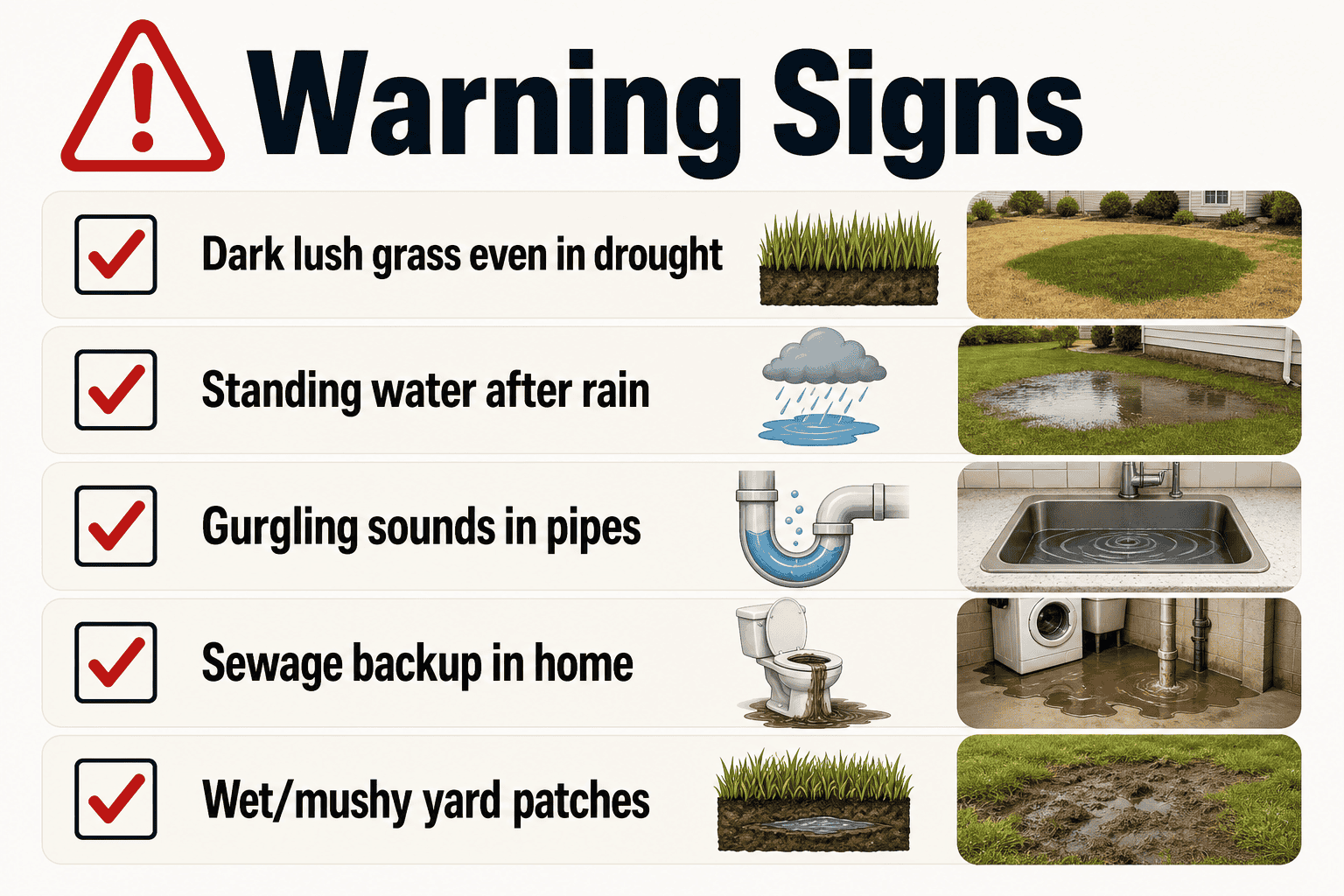
- Does your leach field have dark, lush grass even during times of drought?
- After a rain, do you notice standing water that just will not go away?
- Did you just pump your tanks and you are noticing gurgling in the pipes and believe your system may be overfull already?
These are all signs that something is wrong and needs to be addressed as soon as possible. Once the system has become completely saturated and goes from failing to failed, it will no longer take on any water and you may experience a backup in your home.
What to Do When Your Leach Field Is Not Draining
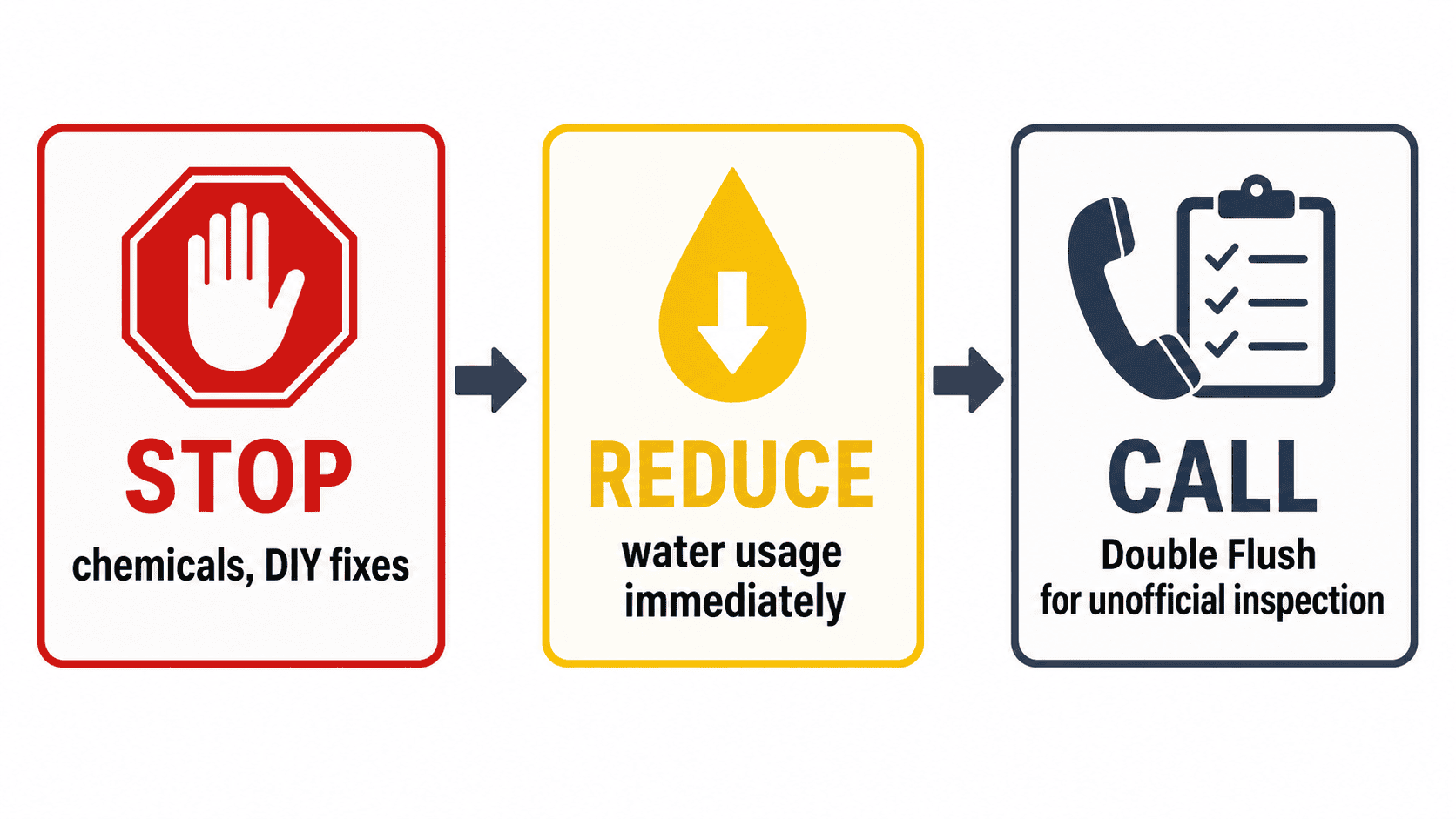
If your leach field is not draining or taking on water, you will want to address your water usage. Conserve water so you do not overwhelm your already failing septic system. If sewage is backing up or surfacing, use the emergency septic service line.
Save your money and skip the miracle chemicals. Call Double Flush and request a service visit. We will come out and determine if it is a simple clog, a broken pipe, or if it is time to talk about a replacement quote.
Frequently Asked Questions
Sources
- EPA: How Septic Systems Work
- EPA: Resolving Septic System Malfunctions
- Ohio Administrative Code Chapter 3701-29
- Ohio State Ohioline: Why Do Septic Systems Malfunction?
Need help with a clogged or failing leach field?
Call or text Double Flush Septic Services for a diagnostic visit. We serve Medina, Summit, Wayne, Lorain, Cuyahoga, Stark, Portage, Ashland, and Erie counties.